
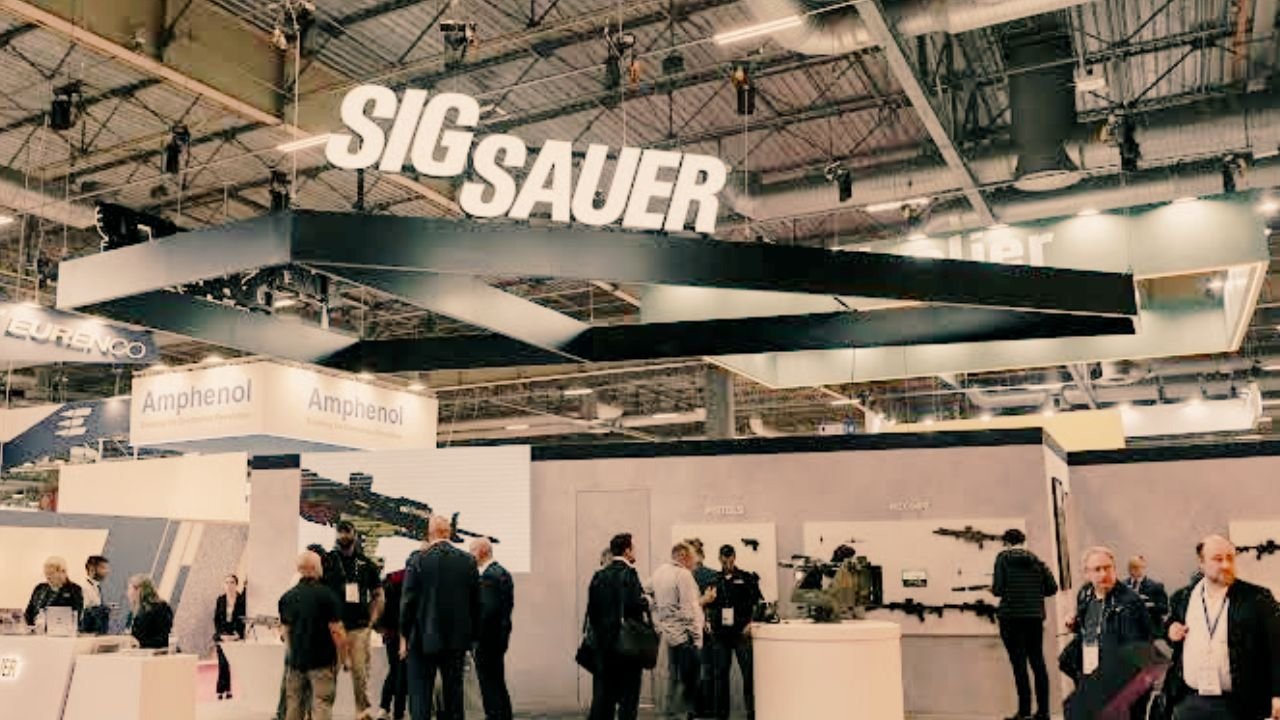
A YouTube video titled “Sig Sauer Bankrupt and Closing German Plant” racks up thousands of views. Suddenly, firearm owners, law enforcement agencies, and potential buyers all start asking the same question — is Sig Sauer done?
The short answer is no. But the longer answer matters, because there’s real confusion here worth clearing up.
This article explains exactly what happened to Sig Sauer’s German operations, how the company is structured across three countries, what the P320 lawsuits actually mean for the business, and what current or prospective Sig Sauer owners need to know right now.
Sig Sauer Is Not One Company — It’s Three Separate Entities
Before anything else, you need to understand the corporate structure. Most of the confusion starts here.
Sig Sauer operated as three distinct legal entities: SIG Sauer GmbH in Germany, SIG Sauer AG in Switzerland, and SIG Sauer, Inc. in the United States. Each one operates under its own legal and corporate framework. Closing one does not dissolve the others.
All three share the same brand name and visual identity. That’s exactly why news about the German entity caused so many people to think the entire brand had collapsed. It hadn’t.
The parent group, L&O Holding, owns the overall business structure. When the German entity shut down, the other two entities kept running independently. The Trace described the post-2020 reality as “only one SIG Sauer” remaining — meaning the US-centered company now dominates the picture. American Rifleman confirmed that the US and Swiss operations were unaffected by the German closure.
What Actually Happened in Germany in 2020
On June 4, 2020, Sig Sauer announced the closure of its Eckernförde, Germany manufacturing facility. The shutdown completed by the end of 2020. Around 125 employees were affected.
This was a plant closure and legal entity dissolution — not a bankruptcy filing. That distinction matters.
Several factors drove the decision, and no single cause explains it fully:
- A hostile regulatory environment in Germany for arms manufacturers
- Legal investigations related to export controls
- Activist and political pressure on German weapons makers
- A failed bid for the German Bundeswehr rifle contract
- Weaker orders worsened by COVID-19 disruption
American Rifleman described it as a result of a “hostile business climate, lack of demand.” Deutsche Welle confirmed the factory closure timeline and the political context surrounding it. Bild reported on the financial turbulence, the failed contract bids, and the pandemic’s contribution.
Importantly, Sig Sauer explicitly stated that spare parts supply and customer support for German-made models would continue after the closure. Owners of German-manufactured firearms were not left without options.
Think of it like an automaker closing a European plant while expanding in the US. Some models made at that plant stop being produced there. But the brand remains. Cars are still sold, still serviced, still supported. People hear “factory closed” and assume “company gone.” Those are two very different things.
The US Operation Is Active and Holds Major Military Contracts
SIG Sauer, Inc. is headquartered in Newington, New Hampshire. It continues to manufacture and sell a full product line — including the P320, P365, MCX, and more.
More than that, the US entity has secured significant military contracts, including adoption of SIG pistols and rifles by US armed forces. That kind of institutional relationship represents serious revenue and long-term credibility. It doesn’t happen to a company that’s falling apart.
The Swiss entity, SIG Sauer AG in Neuhausen, also continues to operate. American Rifleman described it as “doing just fine” in post-closure reporting.
The practical outcome of the German closure was consolidation — the brand became even more centered on its US operations, not eliminated by the loss of the German facility.
The P320 Safety Lawsuits Are a Business Problem, Not a Shutdown Signal
The second major source of concern is the P320 controversy. It’s legitimate, but it needs to be put in the right context.
The P320 faced a documented drop-safety issue. Under certain conditions, the pistol could discharge without trigger contact when dropped at specific angles. This led to lawsuits, media scrutiny, and public concern — including reports of incidents involving law enforcement officers.
Sig Sauer responded with a voluntary upgrade program and design changes to address the issue. The litigation is ongoing, and the reputational damage is real.
But here’s the business reality: lawsuits and safety controversies do not automatically signal that a company is about to shut down. They signal higher legal costs, potential settlements, increased pressure on quality control, and reputational challenges. Those are serious problems. They are not the same as insolvency.
Consider a police department that uses P320s and learns about the drop-safety claims. They may review their policies, push for upgrades, or evaluate alternatives. That’s a reasonable response. What it doesn’t mean is that Sig Sauer is filing for bankruptcy next quarter.
Companies in defense and firearms manufacturing regularly face product liability litigation. The outcome depends on the merits of individual cases, the company’s legal strategy, and its financial resilience — not on speculation in YouTube comment sections.
Bankruptcy Rumors vs. What the Documents Actually Say
Several YouTube channels have posted videos with titles like “The Path to Sig Sauer’s Bankruptcy” — usually arguing that if SIG loses one more major military contract, the whole company collapses.
This is speculative commentary. It’s opinion, not documented financial analysis. There’s a meaningful difference between:
- Documented corporate actions — the German plant closed, the legal entity dissolved, 125 jobs were lost
- Speculative predictions — “if X happens, they’ll go bankrupt”
As of available reporting, there is no credible evidence that SIG Sauer, Inc. has filed for bankruptcy or announced a total shutdown. The US operation is active, under contract with the US military, and selling products commercially.
German press and some commentators used the word “bankrupt” when describing SIG Sauer GmbH, but that was largely colloquial — describing a struggling, closing business in casual terms, not describing a formal legal bankruptcy process. The key question for any reader is: which entities still operate, and under what name? The answer is the US and Swiss entities, both still running.
What This Means If You Own or Plan to Buy a Sig Sauer
If you own an older German-made Sig Sauer — a P226 with Eckernförde markings, for example — the closure of the German plant does not leave you without support. Spare parts supply and service were explicitly stated to continue. US and Swiss facilities can supply parts and service for many of these models.
If you’re considering buying a new Sig Sauer firearm, the US product line is intact. The P320 and P365 are still in production. Military contracts are still active. The brand is not disappearing.
That said, it’s reasonable to stay informed. For any major purchase — firearms included — watch for these signals if you’re monitoring a manufacturer’s business health:
- Major contract wins or losses (military handgun programs, law enforcement tenders)
- Formal bankruptcy filings in US courts
- Production site closures accompanied by corporate-level restructuring announcements
- Changes in product line availability or discontinuation notices
Short-term restructuring looks different from a company genuinely headed toward collapse. One useful habit is to check original corporate statements and established industry publications rather than relying on YouTube titles. For more practical business analysis like this, Start Business Point covers corporate structure, industry changes, and business decisions in plain language.
The Bottom Line
Sig Sauer’s German plant closed in 2020. About 125 people lost their jobs. The German legal entity, SIG Sauer GmbH, was dissolved. That’s a real event with real consequences for the people involved.
But it did not take down the brand. SIG Sauer, Inc. in New Hampshire continues to operate with active military contracts and a full commercial product line. SIG Sauer AG in Switzerland also continues. The confusion came from one entity’s closure being mistaken for the entire brand’s collapse — a predictable mistake given that all three shared the same name.
The P320 lawsuits are a serious ongoing issue that deserves attention. But lawsuits and business failure are not the same thing.
If someone asks you whether Sig Sauer is going out of business, the accurate answer is: no, but the Germany chapter is closed, and the company is now firmly a US-centered operation with all the strengths and challenges that comes with that position.
Also Read:
- Is AvMed Going Out of Business?
- Is Tucson Guns Going Out of Business?
- Is Del Monte Going Out of Business?