
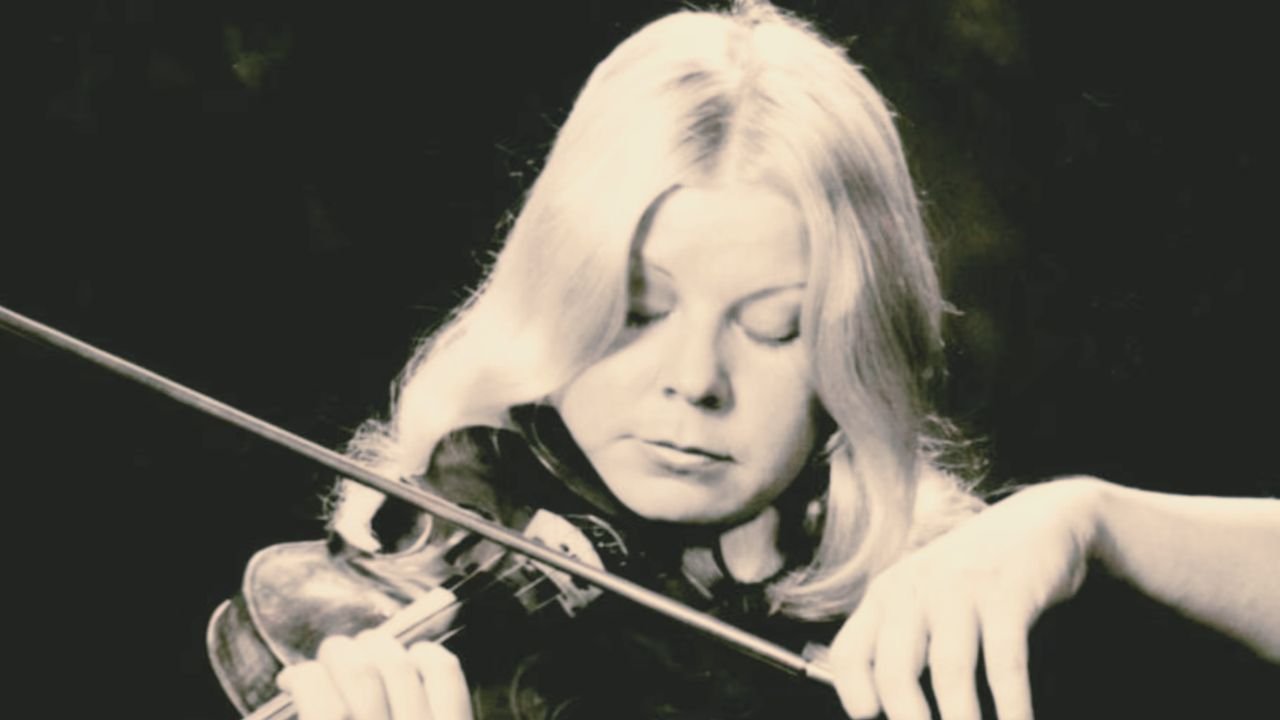
In July 1980, a violinist stepped away from her seat during an intermission at the Metropolitan Opera House in New York. She left her violin behind. She never came back. Her name was Helen Mintiks, and her story has stayed in public memory for over four decades — not just because of what happened that night, but because of the promising life and career that was cut short.
This article looks at who Helen Mintiks actually was: where she came from, how she built her musical career, and what the confirmed record shows about the events of July 23, 1980, and the investigation that followed.
A Farm in British Columbia, a Talent for Violin
Helen was born in 1949 and grew up in Aldergrove, British Columbia, a small community in the Vancouver area. She was the youngest of three sisters. Her parents were Finnish immigrants who ran a poultry farm — a quiet, rural upbringing that gave little obvious signal of what her career would become.
She began studying violin at around age eight. It became clear fairly quickly that she had real ability. As a teenager, she reportedly became concertmaster of the Vancouver Junior Philharmonic, a significant position for someone that young. She also performed as a soloist with the Seattle Symphony, which placed her well above the level of a typical student musician.
These early achievements matter because they show that her path to Juilliard and professional orchestral work was not accidental. She had been building toward it from childhood.
Juilliard, Europe, and a Career Built Across Two Continents
As a young adult, Helen moved to New York to study at the Juilliard School, one of the most respected music conservatories in the world. Available accounts say she earned both bachelor’s and master’s degrees there, though the exact degree titles and years are not always consistent across sources. Juilliard itself is a highly competitive institution, and her acceptance there reflects a serious level of training and talent.
After Juilliard, she spent time studying and performing in Europe. Italy and Switzerland are both mentioned in accounts of her career. She is also reported to have performed in Turkey, Greece, and Jordan. These details are drawn from retrospective sources rather than a fully documented concert history, so they are best understood as a general picture of an internationally active career rather than a verified tour schedule.
When she returned to New York around 1975, she began studying with Nathan Milstein, a widely celebrated violinist known across the classical-music world. Studying with Milstein was not a casual arrangement. He was a demanding and distinguished teacher, and his willingness to work with a musician says something about how that musician was regarded by peers. Helen was not related to Milstein and was not his formal protégée in any promotional sense — but the connection places her clearly within a serious professional tradition.
Her Life in New York and Marriage to Janis Mintiks
After completing her studies, Helen worked as a freelance violinist in New York. Freelance orchestral work is competitive and often demanding — musicians move between engagements rather than holding a single permanent position. It requires consistent skill and a strong professional reputation to sustain.
In 1976, she married Janis Mintiks, a sculptor. Her married surname is how she appears most often in later records and media coverage. The two were living in New York at the time of her death.
It is worth being clear about her public profile: Helen Mintiks was a well-regarded, highly trained musician. She was not a globally famous soloist or a mainstream celebrity. Her name was known in professional musical circles, not in the wider entertainment world. That distinction matters when reading accounts that sometimes describe her in inflated terms.
By the summer of 1980, she was working a freelance engagement with the orchestra accompanying the Berlin Ballet during its run at the Metropolitan Opera House. That job put her in the building on the night of July 23.
What Happened at the Metropolitan Opera on July 23, 1980?
During an intermission in the Berlin Ballet performance, Helen left her seat in the orchestra pit. She left her violin on her chair. When intermission ended and the orchestra prepared to resume, she had not returned.
Her colleagues noticed the violin. It was the kind of detail that immediately signaled something was wrong. A musician does not simply leave a violin behind. A search of the building began.
The Metropolitan Opera House is a large and complex structure, with multiple levels, backstage areas, mechanical spaces, and public sections. That scale helps explain why her disappearance caused confusion before the search turned up any answers. Her body was found the following morning in a ventilation shaft. She had been thrown from the building’s roof.
She was 30 or 31 years old at the time of her death — sources differ slightly on her exact age, though her birth year of 1949 and death date of July 23, 1980 are consistent across records.
The Investigation and Conviction of Craig Crimmins
The investigation focused on people who had access to the backstage and non-public areas of the Metropolitan Opera House that night. Craig Crimmins, a stagehand who worked at the venue, became a suspect. He was arrested and later convicted in 1981 for the murder and attempted rape of Helen Mintiks. He received a sentence of 20 years to life.
The case was sometimes referred to in media coverage as the “Phantom of the Opera” murder — a nickname that came entirely from the setting. The Metropolitan Opera House has a certain dramatic reputation, and a death inside it during a performance inevitably attracted that kind of language. There is no connection whatsoever to Gaston Leroux’s fictional story. The nickname is a media label, nothing more.
It is also worth noting that this case is not unsolved. Crimmins was convicted through the legal process, and that outcome is documented in multiple sources covering the trial and its aftermath.
Why Her Name Still Comes Up Today?
Helen Mintiks appears in genealogy databases, memorial records, and true-crime coverage. People search for her for different reasons. Some are trying to trace a family name. Some have encountered her story through a documentary or podcast and want to know more about the person behind the case. Others are classical-music readers who come across her name in the context of Juilliard or Nathan Milstein and want to understand her place in that world.
Her name appears in records as “Helen Mintiks,” “Helen Hagnes Mintiks,” and occasionally “Helen Karen Hagnes Mintiks.” These variations reflect the way her birth name, middle name, and married surname have been recorded differently across sources. None of these versions is incorrect — they simply reflect different records and contexts.
For those who encounter her memorial page or a family-tree entry online, it is worth knowing that memorial records often preserve community-compiled or family-supplied information. They are useful as a starting point, but not every detail in an online tree is independently verified. The most consistent facts across reliable sources are her Canadian upbringing, her Juilliard education, her marriage to Janis Mintiks, and the basic timeline of the 1980 case.
Resources like Startbusinesspoint can offer guidance when readers are trying to assess how to evaluate information found in public records or online platforms.
Remembering Helen Mintiks
Helen Mintiks grew up on a farm in rural British Columbia and built her way to one of the most respected music schools in the world. She studied with a celebrated violinist, performed internationally, and worked professionally in one of the most competitive music cities on earth. She was 30 or 31 years old when she died.
Her story is remembered partly because of the crime, and that is understandable — the circumstances were deeply unusual. But it is worth reading her full biography rather than just the final chapter. She was a serious, dedicated musician who had worked hard to reach the level she was at. The career, the training, and the path from Aldergrove to the stage of the Metropolitan Opera House are all part of who she was.
That is the complete picture, and it deserves to be told alongside the events of July 1980 — not instead of them, but with them.
Also Read: