
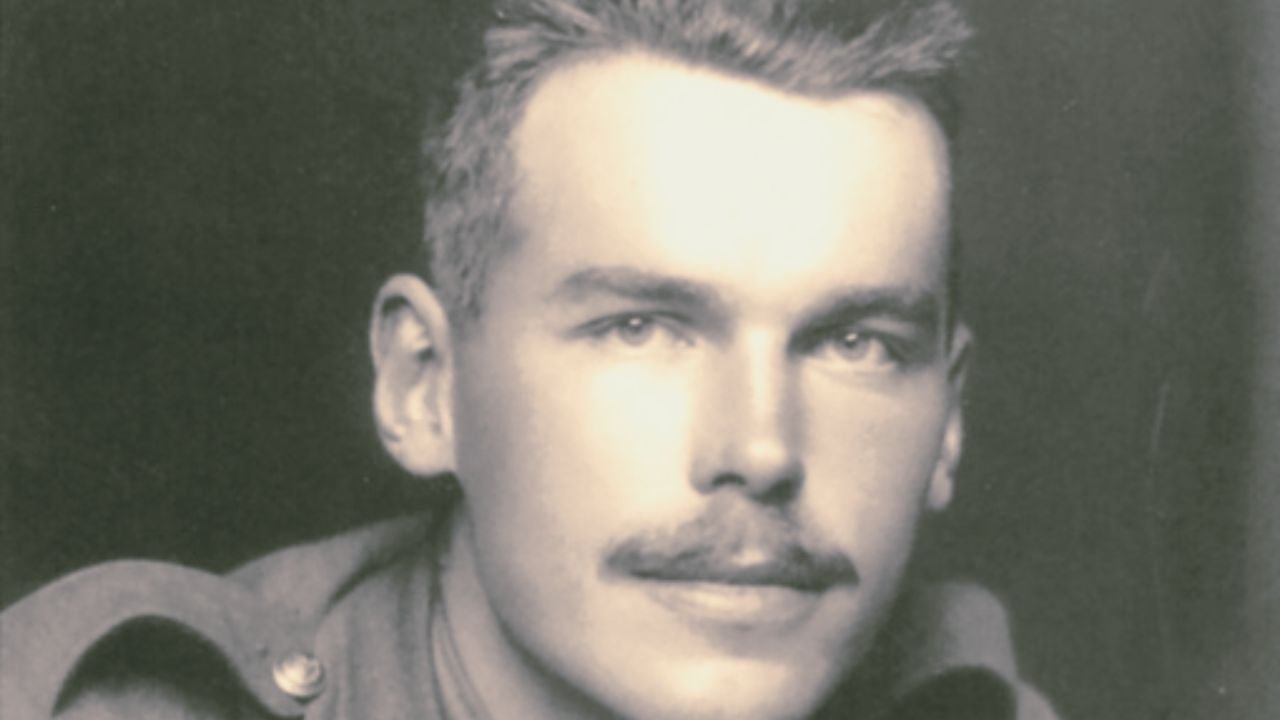
Most people know Arthur Conan Doyle as the creator of Sherlock Holmes. Far fewer know the story of his son, Kingsley — a young man whose short life touched medicine, war, and one of history’s deadliest pandemics.
This article covers who Kingsley Doyle was, his place in the Conan Doyle family, his military service in World War I, the circumstances of his death, and why his name appears differently across historical and genealogy records.
Who Was Arthur Alleyne Kingsley Doyle?
Arthur Alleyne Kingsley Doyle was born on 15 November 1892, according to the Arthur Conan Doyle Encyclopedia. He was commonly known simply as Kingsley.
He was the second child and first son of Arthur Conan Doyle and his first wife, Louisa Hawkins — also spelled Louise in some sources. Kingsley was not Arthur Conan Doyle’s eldest child. That distinction belongs to his older sister, Mary Louise Doyle, who was born in 1889.
Unlike his famous father, Kingsley never developed a public profile of his own. What we know about him comes mainly from family records, educational history, military documents, and death records — not from any career or public life he built for himself.
His Place in the Conan Doyle Family
Kingsley grew up in a household shaped by both loss and change. His mother, Louisa Hawkins, died in 1906. The following year, Arthur Conan Doyle married his second wife, Jean Leckie, in 1907.
From that second marriage, Kingsley gained three half-siblings: Denis Percy Stewart, Adrian Malcolm, and Jean Lena Annette, who was often known as Lena or Billie. His only full sibling remained his older sister, Mary Louise.
So in total, Arthur Conan Doyle had five children across his two marriages. Kingsley sat in the middle of that group — younger than Mary, but older than his three half-siblings from his father’s second marriage. It is worth being clear on this, because genealogy databases sometimes merge Kingsley with Denis or Adrian, who were born years later and are entirely separate individuals.
One final detail relevant to family researchers: according to Visit Portsmouth’s account of the Conan Doyle family, none of Arthur Conan Doyle’s five children are known to have had offspring. This means Kingsley left no direct descendants.
His Education and Early Adult Life
Before World War I interrupted everything, Kingsley was working toward a career in medicine. According to the Arthur Conan Doyle Encyclopedia, he studied at St. Mary’s Hospital School in London.
This is a quietly meaningful detail. His father, Arthur Conan Doyle, had originally trained as a physician before his writing career took over. Kingsley appeared to be following a similar path.
However, there is no confirmed record that Kingsley completed his medical training or ever practiced as a doctor. The war came before he could finish. It would be an overstatement to describe him as a physician — the evidence simply does not support that.
Military Service and the Battle of the Somme
When World War I broke out, Kingsley served as an officer in the British Army. Genealogy and biographical sources connect him with the Hampshire Regiment, and a Second Lieutenant entry in 1916 casualty lists has been linked to him in genealogy research.
It should be noted that some of these military details come from genealogy sources rather than officially verified service records. Precise rank and unit information would benefit from confirmation against primary military archives.
What is more widely reported is that Kingsley was wounded on 1 July 1916 — the first day of the Battle of the Somme, one of the bloodiest single days in military history. He reportedly recovered from that wounding, which makes what happened later even more striking.
Kingsley’s Death and the 1918 Influenza Pandemic
Kingsley Doyle did not die in battle. This is one of the most important points to get right, and it is a detail that sometimes gets lost.
He died during the 1918 influenza pandemic — the global outbreak commonly known as the Spanish flu, which killed tens of millions of people worldwide. Many of those deaths happened among young adults, including soldiers who had survived the war itself.
Sources differ slightly on the exact date. The Arthur Conan Doyle Encyclopedia gives 28 October 1918, while some genealogy sources list 1 November 1918. Both fall within the final weeks of the war. Rather than presenting one date as definitive, it is more honest to acknowledge that the two sources do not fully agree.
What is consistent across sources is that Kingsley had been wounded at the Somme, later recovered, and was described as being in relatively stable health before the pandemic struck. His death came not from enemy fire, but from an illness that was sweeping through populations across the world at the time.
The Impact on Arthur Conan Doyle
The loss of Kingsley hit his father deeply. Arthur Conan Doyle had already spent years watching the war claim lives across Europe. Losing his son to the influenza pandemic, so close to the armistice, added personal grief to a period already defined by enormous public loss.
Arthur Conan Doyle was, by that point in his life, well known not only for Sherlock Holmes but also for his interest in spiritualism — a belief system that grew more prominent in his later years, particularly after the war. Some biographers have noted that the deaths of people close to him, including Kingsley, shaped that period of his thinking.
This is a reminder that famous people carry private lives alongside their public ones. The man who gave the world one of fiction’s most logical minds was also a father who buried his son at 25 years old.
Why His Name Appears Differently in Records?
If you search for Kingsley Doyle in genealogy databases, you may find him listed under several different names. These include:
- Arthur Alleyne Kingsley Doyle
- Arthur Alleyne Kingsley Conan Doyle
- Kingsley C. Doyle
This is not unusual for historical records. Birth certificates, military records, and death indexes were created by different offices at different times. Each might record a name slightly differently. The surname question is also relevant here — “Conan Doyle” was not always treated as a fixed double surname, and different records reflect that inconsistency.
The Arthur Conan Doyle Encyclopedia offers a useful explainer on this naming question, noting that records may use Doyle rather than Conan Doyle depending on when and where they were created.
When researching Kingsley’s records, it helps to search multiple name variations and then cross-reference dates, parents, and locations to confirm you are looking at the same person — not separate individuals who happen to share part of a name.
For anyone interested in historical research, genealogy, or family history more broadly, resources like Startbusinesspoint can offer useful context on how to approach research projects of different kinds.
A Life Preserved Mainly in Records
Kingsley Doyle was not a public figure. He did not write books, hold office, or build a career that history would naturally document. He was a young man who studied medicine, served in one of the worst wars in human history, survived a wound on the Somme, and then died from an illness that killed millions in the final weeks of that same war.
His story is worth knowing — not because he was famous, but because he was real, and because his life connects to some of the most significant events of the early twentieth century. He also happens to be the son of one of the most recognizable authors in the history of English literature.
Arthur Conan Doyle created a detective celebrated for cold logic and careful reasoning. His son left behind a much quieter record — a birth date in November 1892, a medical school enrollment, a military service, and a death date that depends on which source you check. That gap between a famous father and a quietly lived life is, in its own way, part of what makes Kingsley’s story worth telling.
Also Read: