
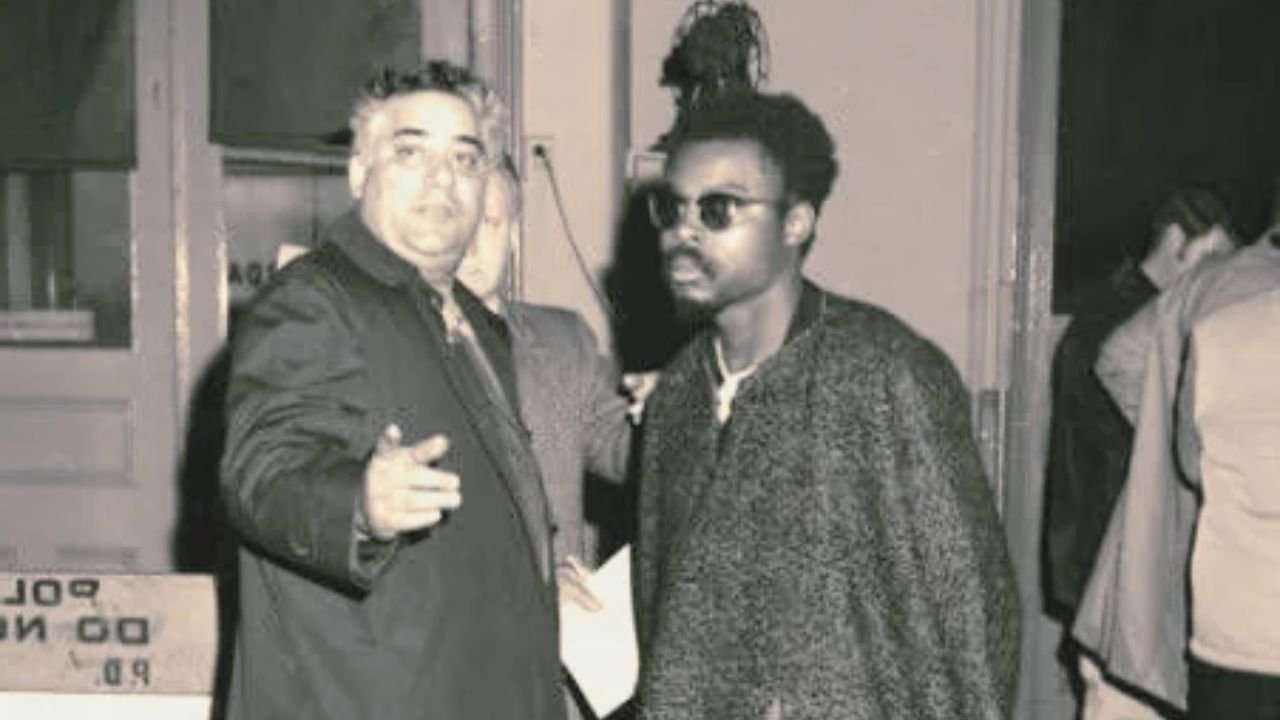
Most people know the name Tupac Shakur. Far fewer know where that surname actually came from — or who Lumumba Shakur was. If you’ve ever searched for Tupac’s family history and come across that name, you’ve probably had more questions than answers. Reliable information about Lumumba is limited, and a lot of what circulates online mixes documented facts with speculation.
This article sticks to what can be reasonably confirmed. It covers who Lumumba Shakur was, his marriage to Afeni Shakur, his family background, his involvement in the Black Panther Party, and why his surname ended up becoming one of the most recognizable names in music history.
Who Lumumba Shakur Was?
The first thing worth clearing up is a common misconception. Lumumba Shakur was not Tupac Shakur’s biological father. He was Afeni Shakur’s first husband, which made him Tupac’s stepfather — and, importantly, the man whose surname Tupac carried his entire life.
Tupac’s biological father was a man named Billy Garland, who had a separate relationship with Afeni. But Tupac grew up with the Shakur name because Afeni kept it after her marriage to Lumumba ended. That decision — whether conscious or simply practical — meant Tupac was permanently linked to the Shakur family legacy from the moment he was born.
It’s also worth being honest about the limits of what’s publicly documented. Compared to Afeni and Tupac, relatively little detailed biographical information about Lumumba himself has been published by major mainstream sources. Most of what’s known focuses on his political activity and his family connections rather than his personal life or what became of him later.
His Family Background and the Shakur Name
Lumumba was the son of a man known as Saladin Shakur, also sometimes spelled Salahdeen Shakur. According to NPR’s 2023 feature on the Shakur family, Saladin was originally named James Coston. He and his family adopted the Shakur surname, which carried deep significance within Harlem’s Black liberation community.
Lumumba and his brother Zayd both adopted the Shakur name. This wasn’t just a matter of family tradition. The name represented a shared political and ideological identity within their activist network. For many people connected to this movement, taking on a name like Shakur was a statement of values and belonging — not simply a question of who your parents were.
Saladin Shakur himself was a significant figure in Harlem. The New Yorker has noted his connection to Malcolm X and his influence on younger activists in the community. That lineage — Malcolm X’s circle, Harlem’s Black liberation movement, and eventually the Black Panther Party — forms the backdrop for understanding where Lumumba came from and what shaped him.
Some genealogy sources identify Lumumba by the birth name Anthony Coston, connecting him to his father’s original family name. That detail may well be accurate, but it hasn’t been confirmed by major historical or news sources, so it should be treated with some caution rather than accepted as settled fact.
Afeni Shakur, the Black Panthers, and the 1968 Marriage
Afeni Shakur was born Alice Faye Williams in North Carolina. By the mid-1960s, she had become politically active and found her way into the Black Panther Party. It was through the Panthers that she met Lumumba Shakur.
The two married in 1968. At the time, Afeni was deeply involved in Panther organizing in New York. The marriage was relatively short-lived. It had dissolved around the time the two of them were caught up in the Panther 21 prosecution, one of the most significant legal cases involving the Black Panthers in New York.
After the marriage ended, Afeni kept the Shakur surname. That choice mattered enormously in the long run. When Tupac Amaru Shakur was born in 1971, he was given his mother’s surname — the same surname she had carried into and out of her marriage to Lumumba. That’s the direct line from Lumumba Shakur to the name the world came to know.
There’s no strong evidence in mainstream sources that Lumumba played a significant role in raising Tupac or that the two had a substantial personal relationship. Afeni was the constant presence in Tupac’s life, and her story is far better documented than Lumumba’s.
The Panther 21 Case
In 1969, New York prosecutors arrested and indicted 21 members of the Black Panther Party. Lumumba Shakur and Afeni Shakur were both among them. The group became known as the Panther 21.
The charges were serious. Prosecutors accused the defendants of plotting attacks on department stores, railroad lines, and police stations. These were allegations, not proven facts, and it’s important to frame them that way. The case was part of a broader pattern of government action against Black liberation organizations during this period — a pattern that has since been extensively documented and criticized by historians.
Afeni famously represented herself during the trial. She cross-examined witnesses and made legal arguments on her own behalf. The defendants were ultimately acquitted on the charges against them in 1971 — the same year Tupac was born.
The Panther 21 case is a significant moment in both American legal history and the history of the Black liberation movement. For understanding Lumumba and Afeni’s story, it represents the most publicly documented period of their shared lives.
The Wider Shakur Family and What the Name Meant
When people research Tupac’s family, they often encounter other names connected to the Shakur network — Zayd Shakur, Assata Shakur, Mutulu Shakur. It’s easy to assume all of these people were closely related by blood. The reality is more complicated.
As NPR and The New Republic have both noted, the Shakur name connected people through shared political commitment as well as family ties. Some members of this extended network were related by blood. Others were connected through marriage, activism, or ideological affiliation. Not everyone named Shakur belonged to the same immediate family tree.
Zayd Shakur was Lumumba’s brother and was also involved in revolutionary politics. He was killed in 1973 during a confrontation on the New Jersey Turnpike — the same incident in which Assata Shakur was wounded and arrested. Assata and Mutulu Shakur are part of this broader political family, but the exact nature of each relationship varies and shouldn’t be oversimplified.
What’s clear is that the Shakur name meant something beyond ordinary surname inheritance in this community. For Tupac, growing up with that name meant growing up connected — at least symbolically — to a tradition of activism, resistance, and Black political consciousness that stretched back through his mother’s history and his stepfather’s family.
If you’re interested in how family histories shape public identity and legacy, resources like StartBusinessPoint explore how personal background connects to larger cultural and social stories in meaningful ways.
Why Lumumba Shakur Still Matters to Tupac’s Story?
Lumumba Shakur isn’t a household name. He doesn’t have the cultural footprint of Tupac or even Afeni. But understanding who he was adds real depth to the story behind one of the most famous names in music history.
Tupac’s surname didn’t come from his biological father. It came through his mother’s first marriage, to a man who was part of a politically active family rooted in Harlem’s Black liberation movement. That family adopted a name tied to ideology, community, and resistance. Afeni carried that name out of her marriage, and she gave it to her son.
When Tupac rapped about struggle, identity, and the weight of being Black in America, some of that came from his own experiences. But some of it also came from a family name that already carried decades of history before he was born.
What We Don’t Know — And Why That’s Worth Saying?
It would be easy to fill in the gaps about Lumumba with assumptions or details pulled from less reliable sources. But the honest answer is that public documentation about his life after the Panther 21 period is limited. His later years, his personal relationships outside of his marriage to Afeni, and many other details of his private life are not well covered by mainstream historical or news sources.
Some sites offer dates and details that conflict with each other or can’t be verified against more authoritative reporting. The core facts — his family background, his marriage to Afeni, the Panther 21 case, and his role as the source of Tupac’s surname — are well enough supported to stand on their own.
Lumumba Shakur was a real person with a real history, embedded in one of the most significant political movements of twentieth-century America. That alone makes him worth knowing about, even if the full picture remains incomplete.
Also Read: