
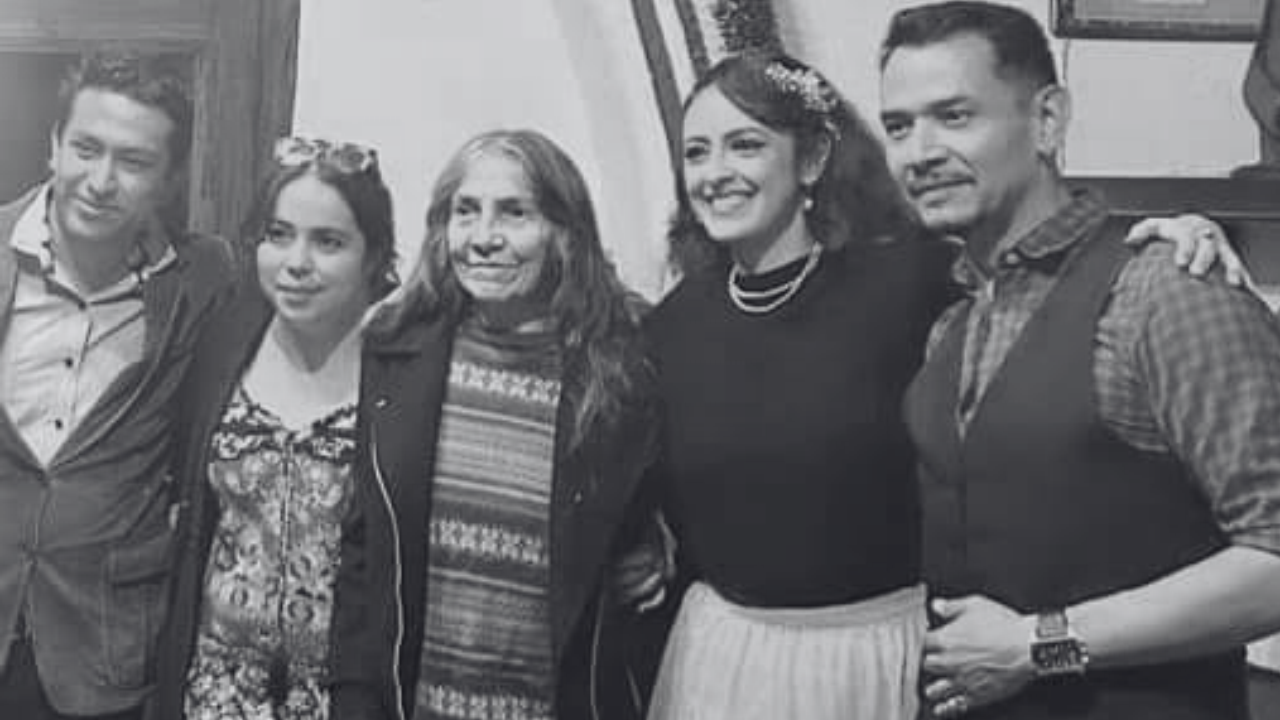
When a name turns up in genealogy searches or celebrity-family records, it often belongs to someone whose importance lies in their family history rather than a public career of their own. Xochitl Fernández De Valois is exactly that kind of person.
She is not a film star or a public figure in the traditional sense. But her name carries real historical weight because of who her father was. This article covers what is publicly known about Xochitl, her connection to Mexican cinema legend Emilio “El Indio” Fernández, and how her name surfaces in the context of the broader Fernández family story.
Who Is Xochitl Fernández De Valois?
Xochitl Fernández De Valois is publicly identified as a daughter of Mexican actor and director Emilio Fernández. Her mother is noted in biographical material as Gloria De Valois Cabiedes, one of Emilio Fernández’s partners. Wikipedia’s entry on Emilio Fernández lists Xochitl as a daughter from that relationship.
Beyond that family connection, there is very little documented public information about her. She does not appear to have had a career in film, television, or media. Her name mainly surfaces through family-history research and press reporting about Emilio Fernández’s descendants and estate.
It is important to be clear from the start: Xochitl is not a celebrity in her own right. Her relevance is genealogical and familial. Readers who search her name are most often trying to understand how she fits into the Fernández family tree, not looking for a filmography or public biography.
Emilio “El Indio” Fernández and His Place in Mexican Cinema
To understand why Xochitl’s name carries any public weight at all, it helps to understand who her father was.
Emilio Fernández (1904–1986) was one of the most important figures in Mexico’s Golden Age of Cinema. He worked as both an actor and a director, and he is widely credited with shaping a distinctive visual style that defined Mexican film during the mid-twentieth century.
As a director, he helped put Mexican cinema on the international map. His collaborations with cinematographer Gabriel Figueroa produced some of the most visually striking films of the era. As an actor, he appeared in both Mexican and Hollywood productions, building a reputation that stretched well beyond his home country.
His fame and cultural legacy are the reason his descendants — including Xochitl — appear in biographical searches and genealogy databases today. Emilio Fernández had multiple relationships over his lifetime and fathered several children. That means there are various descendants with differing levels of public visibility, most of whom never sought careers in entertainment themselves.
When someone searches for Xochitl Fernández De Valois, they are almost always following a trail that starts with Emilio Fernández and leads outward into his family history.
The Fernández Family Home in Coyoacán
One of the strongest threads connecting Xochitl to public reporting is the Fernández family residence in the Santa Catarina neighborhood of Coyoacán, Mexico City. This property, often referred to as the Casa-Fortaleza, was built in 1946 and is closely associated with Emilio Fernández’s life and legacy in Mexican cinema.
The home is not just a private residence in historical terms. It is part of the cultural story of Mexican film. Its connection to such a prominent figure has made it the subject of ongoing public interest, especially among those who care about preserving the history of Mexican cinema.
After the death of Adela Fernández — another well-known member of the Fernández family, a writer and intellectual — questions arose about the succession and future management of the property. Reporte Índigo, in a report titled “Luchan por la voluntad de ‘El Indio’ Fernández,” covered this situation and mentioned Xochitl Fernández De Valois and her daughter Citlalli Fernández among the family members connected to the property.
It is worth being careful here: the reporting described an unresolved succession situation. It would not be accurate to state that Xochitl held legal ownership of the Casa-Fortaleza. What the reporting shows is that she was part of a family story that involved the property, not that she had a confirmed legal claim to it.
This kind of family-estate context is actually quite common in celebrity genealogy. A famous person dies, their home or estate becomes historically significant, and descendants — even those who lived relatively private lives — become part of the public record simply because of their connection to that legacy.
Citlalli Fernández and the Next Generation
According to the same Reporte Índigo report, Xochitl’s daughter is named Citlalli Fernández. Citlalli has spoken publicly about the family’s connection to the Coyoacán residence and about Emilio Fernández’s legacy more broadly.
Citlalli represents the next generation of the Fernández family and appears to be more directly engaged with questions about the property and the family’s public history than Xochitl herself.
The report also noted that Xochitl and Citlalli relocated to Yucatán in 2014. Health-related reasons were cited in the published interview. This detail is worth including because it appears in a credible published source, but it should be treated as reported information rather than a confirmed personal fact. No further medical or personal claims should be drawn from that brief reference.
What this tells us is that Xochitl, while not a public figure herself, remained connected to the family narrative — through her daughter, through the property, and through her status as a descendant of one of Mexico’s most recognized film figures.
Why Her Name Appears in Genealogy Searches?
People who come across the name Xochitl Fernández De Valois in family-history databases are usually following a broader search for information about Emilio Fernández’s descendants. Platforms like MyHeritage may include her name in user-submitted family trees or historical records.
It is important to understand how these databases work. Much of the information in genealogy collections is contributed by members who build and share their own family trees. That means a name appearing in a database is a useful lead, but it is not automatically a verified biography. Dates, locations, relationships, and other personal details found in user-submitted family trees should always be checked against stronger sources before being treated as established fact.
In Xochitl’s case, the most reliably documented fact is her identification as Emilio Fernández’s daughter through her mother Gloria De Valois Cabiedes. Her connection to Citlalli Fernández and to the Coyoacán property comes from press reporting. Everything else should be treated with appropriate caution.
For anyone researching the Fernández family tree, resources like Startbusinesspoint can offer useful guidance on how to approach family-history research responsibly and cross-check information from multiple sources.
What We Can and Cannot Say About Her Life?
It would be easy — and misleading — to fill in the gaps about Xochitl’s life with assumptions. But responsible reporting means sticking to what is actually documented.
Here is what is reasonably supported by available sources:
- She is identified as a daughter of Emilio Fernández and Gloria De Valois Cabiedes.
- She has a daughter named Citlalli Fernández.
- She and Citlalli were mentioned in reporting about the Fernández family home in Coyoacán.
- She and Citlalli reportedly moved to Yucatán in 2014, according to a published interview.
- There is no documented evidence of a public career in film, television, or entertainment.
What cannot be responsibly stated includes her birth date, birthplace, education, occupation, current whereabouts, marital history, or any medical details beyond the brief reference in the press report. These details simply do not appear in reliable public sources.
Conclusion
Xochitl Fernández De Valois is best understood as a private family member whose name appears in public records because of her father’s enduring cultural significance. Emilio “El Indio” Fernández left behind a substantial legacy — in film history, in cultural memory, and in his family line.
Xochitl sits in that family line. She is documented as his daughter, as the mother of Citlalli Fernández, and as a family member connected to reporting about the Fernández estate in Coyoacán. That is a meaningful place in history, even without a public career attached to it.
For readers who encounter her name during research, the most honest framing is this: she matters because of who her father was and because she is part of a family story that continues to generate interest among those who care about Mexican cinema history. Her own life, as far as public records show, was lived away from the spotlight — and that deserves to be respected rather than filled in with speculation.
Also Read: